Most people who work out they are talking to a romance scammer do not know who to tell. Some are embarrassed, some expect nothing to happen, and some are not sure a report is even possible when the scammer lives in another country. It is possible, and the order matters: the platform, your bank, a national agency and, in some cases, the police each handle a different part of the problem. This guide explains where to go, what to include in each report and what happens afterwards. If you have already sent money and need the full recovery plan, read what to do immediately after realizing you’ve been scammed.
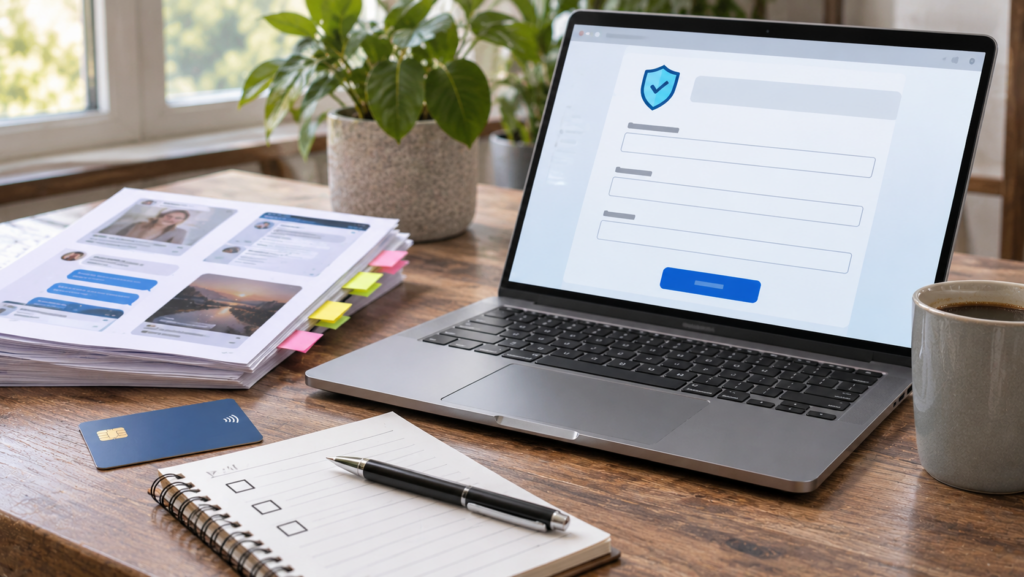
A report is only as good as the material behind it. Scammers delete profiles quickly once they sense trouble, and a deleted profile takes the chat history with it.
Do not announce that you know. A scammer who feels exposed will often delete the account within hours, or switch to threats. Stay quiet, send nothing more and keep the conversation as it is until you have saved everything.
Take screenshots of the profile, the full chat, the usernames and phone numbers, and every photo they sent. Keep payment receipts, transfer confirmations, gift card numbers and wallet addresses. Save the web addresses of any investment site you were sent to. Store the files in one folder, off the device you were chatting on if you can. You will use the same material for every report below.
You do not need to choose one place. Most people end up filing in three or four, and each takes a few minutes once the evidence is ready.
This is the first report, and the fastest. Use the in-app report button on the profile and choose the option for fake accounts or scams. The FTC tells victims to notify the app or site where they met the scammer, because a removed profile protects the next person. Do it early: banks such as Lloyds point out that scammers push people onto messaging apps precisely because profiles on dating apps can be reported. If you want to report a dating scammer who contacted you on several platforms, report each profile separately.
If you paid by transfer, card, gift card or cryptocurrency, call the company straight away. The FTC advises victims to contact the bank or company, say they paid a scammer and ask for a refund. In the UK, call the number on the back of your bank card rather than a number the scammer or a stranger gave you (Which?). Speed matters here more than anywhere else, since some transfers can still be stopped in the first hours.
File at ReportFraud.ftc.gov. The FTC says to tell it about romance scams after notifying the platform. The form asks about the payment method and the amount even when you do not expect to get anything back, because those figures show agencies where the losses are.
The FBI runs IC3 for internet crimes, and romance scams are covered. The FTC says that if someone is trying to extort you, the report goes to the FBI. A guide from the Justice Department’s Office for Victims of Crime notes that the form must be completed on a laptop or desktop, not a phone or tablet, and that you cannot attach files. Have the details typed out in a document beforehand so you can copy them in.
In England, Wales and Northern Ireland, report to Report Fraud, which was formerly called Action Fraud; in Scotland, call the police on 101 (Which?). In Canada, file with the Canadian Anti-Fraud Centre online or by phone at 1-888-495-8501 (Scotiabank). In other countries, start with the local police and the national consumer protection or cybercrime agency, and ask your bank which one it works with.
A police report is useful for insurance, for bank disputes and for any case involving blackmail. If you sent intimate photos and the scammer is threatening to share them, file a police report and an FTC report and stop communicating. Do not pay a blackmailer; payment usually brings more demands.
Platform and agency reports are private. A public blacklist works differently: other people search it before they trust a name or a photo. Add the profile details, the photos and the way the scammer approached you to the Verified-Love Blacklist, so someone who runs the same search next week finds a warning instead of a stranger who seems perfect.
Forms differ, but they ask for the same core facts. The Justice Department guide mentioned above says the two kinds of information that matter most in an IC3 report are transaction details and the scammer’s contact details, and that a long account of the story is less useful. Prepare these items once and reuse them everywhere.
Every name they used, usernames, email addresses, phone numbers, the platform and the profile link. Add the job and location they claimed, such as an oil rig engineer or an army officer abroad. These details are often reused, and they help investigators and other victims connect cases.
The date, the amount, the currency, the method, the name on the account or the wallet address, and the bank or exchange you used. For gift cards, the card type and the numbers. For cryptocurrency, the transaction ID. List them in order and add the total.
Where and when you met, when the first request for money came, how the payments followed and when you stopped. Five to ten lines is enough. It should read like a log, not a confession.
Screenshots of the chat and the profile, the photos they sent and any documents, such as fake IDs, tickets or invoices. Where a form does not accept uploads, say that you have them and keep them ready.
Agencies sometimes need to reach you. Use an email address the scammer does not know.
| Your situation | First call | Then |
| You sent money by bank transfer or card | Your bank, today | Platform, national agency, police |
| You paid with gift cards | The card issuer, with the card numbers | Platform, national agency |
| You sent cryptocurrency | The exchange you used | National agency, IC3 if in the US |
| You are being blackmailed with photos | Police, and do not pay | Platform, FBI or national agency |
| You have not sent money | The platform | National agency, blacklist |
Gift cards are worth acting on quickly: the FTC found that 24% of people who lost money to a romance scam in 2022 said it was taken with gift cards.
Expect little contact, and do not take that as a sign that nothing was done. The IC3 terms say plainly that any contact or investigation is at the discretion of the receiving agency and that you will not be contacted by the IC3. Individual refunds are rare, especially when the money went abroad or into cryptocurrency. What your report does is feed the data that shows agencies where the losses are. The U.S. Postal Inspection Service puts it this way: the more reports of these scams, the more resources will be dedicated to preventing them.
Two things are worth doing in the weeks after. Watch your accounts and credit report for activity you do not recognise, particularly if you shared an ID, a bank login or a code. And be careful with anyone who contacts you offering to recover your money for a fee. This is a common second scam aimed at people who have already reported. Our article on what to do immediately after realizing you’ve been scammed covers recovery step by step, including how to spot that second wave.
Shame is the main reason people stay silent. In the UK, Which? reported that many victims feel too embarrassed to speak about their experience, and that underreporting makes the real scale hard to measure. A report takes about as long as writing a long message, and it can get a fake profile removed, which stops the same photos from reaching someone else tomorrow.
If you are not sure yet whether the person you are talking to is a scammer, you do not need to file anything before you know. AllAboutDatingScams reviews messages, photos and profile details together and compares them with known scam patterns, so you can decide before money moves. If you have already lost money, we can help you organise what you have into a clear timeline for your reports. Request a verification, and use the blacklist at Verified-Love to check whether the same name or photos have been reported by others.
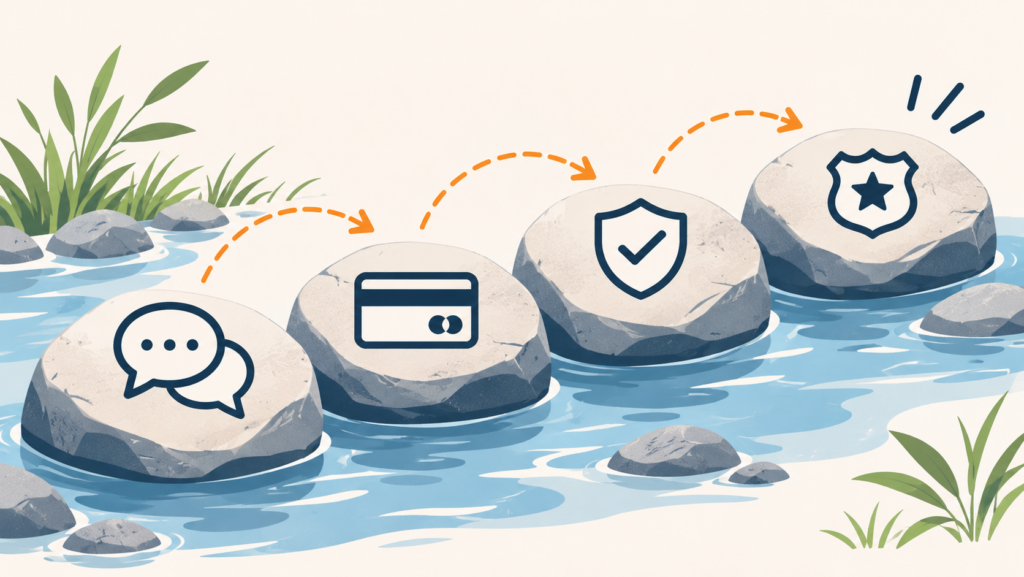
Reporting a romance scammer is a short list of tasks done in a sensible order: save the evidence, tell the platform, call your bank, file with the national agency and, where there is blackmail or a large loss, the police. None of it needs to be perfect. A clear list of names, payments and dates is enough, and every report adds to the picture that helps the next victim.
Start with the app or site where you met, then call your bank or payment provider if you sent money. After that, report to your national agency, which is the FTC and IC3 in the United States, Report Fraud in England, Wales and Northern Ireland, or the Canadian Anti-Fraud Centre in Canada.
Platform reports are usually handled without telling the other person who filed them. Agency forms typically ask for your contact details, but they are used to follow up and are not shown to the scammer. Check the privacy terms on the form you use.
Yes. Your report can get the profile removed and it adds to the pattern data. It also helps to add the profile to the Verified-Love blacklist so others can find it.
Sometimes, but not often. The route most likely to work is your bank or payment provider, and only if you contact them quickly. Be careful with anyone who promises a guaranteed recovery for a fee.
Go to the police and do not pay. In the United States, the FTC says that if someone is trying to extort you, you should also report it to the FBI. Report the profile to the platform as well.