
He said he was a soldier deployed overseas. The photos looked real: desert background, military uniform, serious face. He wrote every morning and most nights. He asked about her family. He remembered her dog’s name. He said war had changed him and that he wanted a quiet life with someone loyal.
After three weeks, he said he loved her.
Then came the problem. His bank account was locked because he was deployed overseas. He wanted to visit, but needed money for a leave request. Then came customs fees for a valuable package. Then medical treatment for a fellow soldier. By the time she contacted her bank, the real man in the photos had no idea she existed.
That is the basic structure of military romance scams. A fraudster pretends to be one of the service members, builds an emotional bond, then asks for money or personal information.
A military romance scam is a fraud where someone poses as military personnel online, creates trust, and manipulates the victim into sending money, sharing banking details, or exposing themselves to identity theft.
These scams feel believable because people respect the military. A uniform creates a false sense of honor. Deployment explains distance. Security restrictions explain why video calls do not happen. Poor internet explains delays. War explains danger. The scammer does not need the whole story to be true. He only needs enough of it to make you stop checking.
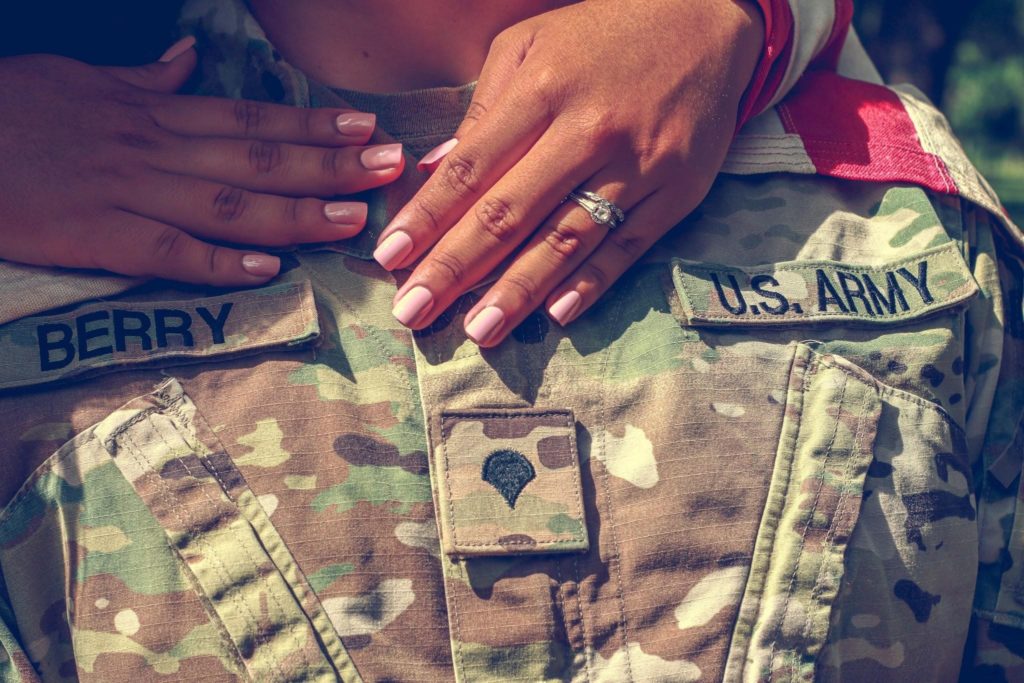
Most military dating scams start on dating sites, a dating app, Facebook, Instagram, or another social media platform. The profile usually looks calm and disciplined. He may claim to be active duty, widowed, divorced, raising a child through family members, or deployed overseas.
Fraudsters create fake profiles using stolen photos of real military personnel. Sometimes the person in the picture is a real soldier. The person writing is not. That is why military catfish scams are so convincing.
The first phase is not money. It is attention.
He writes often. He talks about loneliness, sacrifice, faith, family, and wanting peace after service. He says you are different. He shares deep feelings before there has been any real proof of his identity. This is where military love scams begin to work: the victim becomes emotionally invested before the first payment request appears.
Then he moves the conversation off the original platform. He may say the dating app is unsafe, the social media site is monitored, or he cannot use it because of military security restrictions. Once the conversation moves to WhatsApp, Telegram, or another private app, reporting becomes harder.
The final phase is the financial ask. It may be for a leave request to visit, food, housing, medical care, customs fees, a valuable package, a locked bank account, or basic necessities. The story changes. The demand does not.
Real military personnel do not need strangers online to pay for leave, food, housing, medical treatment, or access to their own bank account.
Love bombing is one of the first warning signs.
A military scammer may write:
“I have never felt this close to anyone.”
“When I return, I want to marry you.”
“You are the only person keeping me alive.”
“I trust you more than anyone.”
Scammers quickly proclaim love and propose marriage to manipulate victims. Rapid emotional escalation is a red flag in potential scams, especially when the person avoids video chat, refuses live verification, or has never met you in real life.
Pause communication after intense affection. Not forever. Just long enough to think.
Ask yourself:
Why is love arriving before proof?
Why is marriage being discussed before a real video call?
Why does he have time for constant messaging but not for basic verification?
Military love scam stories often use emotion as a bridge. On one side is sympathy. On the other side is money.
The money request is the point where military romance becomes financial risk.
Common payment methods include:
Requests for untraceable payments like gift cards are common because they are hard to reverse. Wiring money to someone you have never met is also dangerous.
Common excuses include:
Never send money to someone you have never met in person. This rule is simple because the scam is not.
A real soldier does not need a romantic partner from online dating to pay military fees. Leave is not purchased by girlfriends, fiancées, or future wives. If someone claims money is needed to approve leave, treat it as a scam.
One of the most common lines in military money scam cases is:
“I cannot access my bank account while deployed.”
Another version:
“My account is locked because I am overseas.”
Or:
“I need you to receive money for me.”
Scammers often claim they cannot access their bank accounts while deployed. Then they ask for money or personal information. Some ask to use your bank account “just once.” Do not do it.
Never share your banking details, online banking password, card number, one-time codes, or recovery information with someone you met on a dating site or social media. If money moves through your account, you may become involved in fraud without realizing it.
If you already shared details:
Contact your bank immediately.
Change passwords for all online accounts immediately.
Ask the bank to place alerts on your bank account.
Check for unauthorized transfers, new payees, changed phone numbers, or suspicious logins.
If personal details were shared, consider a credit freeze and identity theft protection.
File an official identity theft report with the Federal Trade Commission if your information was misused.
Medical emergencies are one of the strongest emotional hooks.
A military scammer may say he was injured, a fellow soldier needs medical care, his child is sick, or his mother needs surgery. He may send fake hospital documents, a photo from a bed, or a message from a supposed doctor.
Do not treat documents as proof. Scammers use stolen photos and fake documentation to create identities.
Verify medical claims independently. Do not call the number he gives you. Do not use a link he sends. Look up official channels yourself.
Real service members have military medical systems and support channels. They do not need strangers from dating sites to pay for medical treatment.
If the story is real, verification will not destroy it. If the story is fake, verification will expose it.
A military ID photo is not proof.
Fake IDs are easy to create. A photo in a military uniform is not proof. A profile with flags, medals, and base names is not proof.
Military dating scam photos are often stolen from real soldiers. The person in the image may be genuine military personnel, but the person writing may be a romance scammer using that face.
Performing a reverse image search can help identify fake profiles. Use Google Images, TinEye, Yandex Images, or other tools. Search the profile photo, uniform photo, and casual photos. If the same image appears under another name, stop.
Also protect your own personal details. Romance scammers collect information as they talk: your address, family members, job, income, bank, children, divorce, and schedule. That information can be used for identity theft or another scam.
Deployment can limit communication. It does not usually allow someone to message romantically all day, every day.
If someone claims to be active duty under strict security restrictions but can send long emotional messages for hours, be cautious. If he cannot do video calls because of security concerns but can ask for money, be more cautious.
Scammers often avoid video calls citing poor internet, classified work, broken cameras, or military rules. Some restrictions can be real. Endless refusal is not.
Scammers may claim to be deployed for over two years. Most military deployments vary by branch and mission, but claims of a secret two- or three-year deployment with no leave, no family contact, and no verifiable details should be questioned.
Ask safe practical questions:
What is your military occupational specialty?
What branch are you in?
What is your normal duty station?
How long is this deployment supposed to last?
What can you share without breaking rules?
Do not ask for classified information. You are not trying to make real military personnel violate rules. You are checking whether the story survives normal questions.
Many military online dating scams begin on an app or social media, then move quickly to private messaging.
The excuse sounds normal:
“I do not use this app often.”
“My commander monitors this platform.”
“Let us talk somewhere safer.”
Moving off-platform helps the scammer. The original dating app loses visibility. Reports become harder. The scammer controls the conversation. Payment requests, fake documents, and emotional pressure now sit in one private thread.
Keep early chats on the original platform. If you move, save contact details: username, phone number, email, profile link, photos, payment instructions, and dates.
Consult trusted friends or family about online interactions. Scammers often isolate victims before asking for money.
The valuable package story is one of the oldest military internet scams.
He says he wants to send you money, gold, documents, medals, or personal belongings for safekeeping. A shipping company contacts you. Then come customs fees, handling fees, insurance, clearance fees, and more payments.
Refuse to hold unknown packages. Refuse to pay release or handling fees. Refuse to speak with a “courier,” “diplomat,” or “customs officer” introduced by someone you met online.
A real soldier does not need a romantic partner he has never met to receive valuable property or cash.
Some military scams become darker.
A person claiming to be military may say he has been captured, detained, injured, or trapped in a war zone. Then another person contacts you demanding ransom. The message may include threats, photos, fake documents, or emotional recordings.
Red flags include:
Verify through official channels. Contact local law enforcement immediately. Report the scam to the FBI immediately if there is extortion, threats, or kidnapping claims. Do not negotiate alone. Do not pay quietly.
| Red flag | What it looks like |
| Love bombing | “I love you” within days or weeks |
| Avoids video calls | Poor internet, security concerns, broken camera |
| Money request | Leave, food, housing, customs fees, medical care |
| Bank account story | Locked account, no access while deployed |
| Stolen photos | Uniform photos appear elsewhere |
| Fake ID | Sends military ID as proof |
| Off-platform move | Leaves the dating app quickly |
| Package story | Valuable package needs customs fees |
| Personal details request | Address, bank, ID, passwords |
| Untraceable payment | Gift cards, crypto, wire transfer |
| Isolation | “Do not tell anyone” |
| Anger at questions | “You do not trust me” |
This is the common military scamming format: fake profile, stolen photos, emotional bond, off-platform messaging, love bombing, crisis story, request money, more money.
Research people you interact with on dating sites thoroughly.
Request a military email address to verify identity. A military email address may end in .mil, though not every genuine military person will use one for personal dating. A refusal alone does not prove fraud. A refusal plus money requests, fake documents, and avoidance of video calls is different.
Ask for a timestamped photo by text: today’s date, your first name, and a simple gesture. Suggest phone or video calls instead of constant messaging.
Ask about military occupational specialty, branch, deployment timeline, and normal duty station. Cross-check public details with official sources where possible. Be careful: scammers copy real names and units. One correct public detail is not proof.
Genuine military personnel can tolerate reasonable caution. Military romance scammers cannot.
If you were scammed, act quickly.
Contact your bank to report any money transfers.
Ask whether the payment can be recalled, frozen, or disputed.
Change passwords for all online accounts immediately.
Freeze credit if personal details were shared.
File an identity theft report with the FTC if your information was misused.
Save all messages, receipts, usernames, emails, phone numbers, photos, and documents.
Report the scammer to the dating platform or social media site.
File a report with the Federal Trade Commission or IC3.
Contact local police if money was lost or threats were made.
It is important to report suspected scams to the authorities. Reporting may not recover everything, but it can help connect your case to a larger operation.
The financial loss is only part of the damage.
Victims also lose the relationship they thought they had. Some feel shame. Some feel grief. Some keep checking messages even after the proof is clear. That reaction is human.
Seek emotional support from friends or professionals. Join survivor groups if you can. Talk to trusted friends. Monitor credit and bank statements regularly. Check monthly credit reports for anomalies.
Do not answer recovery scammers who promise to get your money back for an upfront fee. That is often the next scam.
Military romance scams work because they borrow respect from real service members.
They use the uniform, deployment, war-zone fear, poor internet excuse, bank account story, leave request, fake package, and your sympathy. Then they ask for money.
The safest rule is simple: never send money to someone you have never met in person.
Real soldiers do not need strangers from dating sites to pay for leave, food, housing, medical treatment, customs fees, or access to bank accounts.
A scammer needs urgency.
A real person can wait.
Military romance scams involve fraudsters posing as service members online, building trust, and manipulating victims into sending money or personal information.
Yes. Dating scams military profiles appear on dating sites, dating apps, and social media. Fraudsters create fake profiles using stolen photos and deployment stories.
Common excuses include leave fees, locked bank accounts, food or housing expenses, medical emergencies, customs fees, valuable packages, poor internet, and security restrictions.
No. Real military personnel do not ask strangers online to pay for leave, medical care, food, housing, customs fees, or basic necessities.
Yes. Some restrictions are real, but repeated refusal to use video chat or video calls is a major warning sign.
Request a military email address, ask for a timestamped photo, suggest video calls, ask safe questions about military occupational specialty, and cross-check public details.
Contact your bank, save evidence, report the scammer to the dating platform, file a report with the FTC or IC3, and contact local police if financial losses occurred.