
A woman in Ohio met a man online who said he was finishing a master’s degree on a student visa and would have to leave the country in a year unless something changed. They dated for four months, married at the courthouse, and she filed the paperwork to sponsor him for a green card. Eighteen months later, right after his conditional residency was approved, he moved out, stopped answering her calls, and she found out from a mutual friend that he had already been talking to someone else before the wedding. This is what a dating scam for immigration usually looks like. It rarely involves someone asking for your bank account number. It involves someone using your signature on a federal form.

Most coverage of romance scams focuses on money. Someone meets a fake profile online, builds trust for weeks, then gets hit with a request for gift cards or a wire transfer. Immigration dating fraud runs on a different asset entirely. The scammer isn’t after your savings. They’re after your citizenship, or at least your willingness to put your name on a government petition that gets them a visa, a conditional green card, or eventually a 10 year green card and a path to citizenship of their own.
That difference changes everything about how the scheme unfolds. A financial romance scam usually ends fast, once the money is gone or the victim stops sending it. A romance scam for immigration has to last. The relationship needs to survive an initial visa interview, two years of conditional residency, and often a second interview to remove those conditions, which means the person running the scheme has a strong incentive to keep up appearances far longer than a typical scammer would bother to.
It also doesn’t always involve a solo operator. In August 2026, the Justice Department unsealed charges against 11 defendants accused of running a marriage fraud network that had operated for more than a decade, arranging over 1,000 sham marriages between foreign nationals, primarily citizens of the People’s Republic of China, and U.S. citizens. According to the indictment, participants were charged as much as $100,000 for a staged marriage and help securing a green card, while the defendants coached couples on what to say in USCIS interviews and manufactured evidence of a shared life, according to the Department of Justice. Cases like that show this isn’t always two people improvising. Sometimes there’s a broker finding U.S. citizens willing to marry a stranger for a fee, and sometimes there’s a broker finding U.S. citizens who have no idea they’re the target of a relationship scam for immigration rather than a real one.
The mechanics are simpler than most people expect, which is part of why they work.
Someone identifies a U.S. citizen, often through a dating app, a social media comment section, or a mutual connection, and starts a relationship that moves faster than most. The urgency usually has a reason attached to it: a visa is about to expire, a student visa holder needs a reason to stay, or a tourist visa is running out and going home “isn’t an option” for some sympathetic reason. Marriage gets proposed early, sometimes within weeks, and the framing is almost always romantic rather than practical, even when the timeline tracks suspiciously close to a visa deadline.
Once married, the couple files Form I-130 to establish the relationship and, if the marriage is less than two years old at approval, the foreign national receives a conditional green card rather than a permanent one. That conditional status only lasts two years, and the couple has to jointly file Form I-751 to remove the conditions, typically submitting shared bank statements, lease agreements, insurance policies, and other evidence that the marriage is bona fide rather than a legal fiction. This is the stretch where a fraudulent relationship usually has to work hardest to look real, because USCIS is specifically trained to look for marriages that exist on paper but not in practice.
The process got harder to game recently. In October 2025, USCIS issued Policy Alert PA-2025-23, updating how officers evaluate whether a marriage qualifies at all, including tighter rules on which marriages are recognized and a requirement that adjudicators review a petitioner’s full history, including any prior fraud findings, before approving a new spousal petition. If an officer still isn’t convinced, the couple may be called in for what’s officially a fraud interview but is more commonly known as a Stokes interview, where spouses are questioned separately about details of their daily life and relationship history, and their answers are compared afterward for consistency. A couple that can’t agree on basic facts, that needs a translator despite supposedly living together for years, or that gives answers clearly rehearsed rather than remembered, tends to get flagged here. Once the conditions are removed and the 10 year green card is issued, some version of this scheme simply ends. The marriage dissolves, the foreign national’s status is already secure, and the U.S. citizen spouse is left with a failed marriage and, sometimes, legal exposure of their own if they knowingly participated.
Not every version of this is two adults making a calculated, if dishonest, arrangement. In the schemes run by brokers, the foreign national isn’t always a willing participant either. DHS’s own Blue Campaign, the department’s human trafficking awareness initiative, specifically warns that trafficking can happen inside intimate relationships, where someone’s trust is manipulated to control and exploit them, and that traffickers sometimes use the promise of love or a relationship as the hook itself.
If a foreign national you know seems to have no control over their own passport or immigration documents, owes an unclear and growing debt to whoever arranged the marriage or the matchmaking, or describes fear of what happens to them if they try to leave the arrangement, that’s no longer just immigration fraud. Federal law provides a specific path out of that situation through T nonimmigrant status, a form of immigration relief built for trafficking victims regardless of how they entered the country or the arrangement.
Generic advice to “trust your gut” isn’t useful here. These are specific and checkable, by you or by the family members closest to the situation.
The relationship timeline lines up too neatly with a visa or status deadline. If someone mentions, early and often, that their visa expires on a specific date, and the marriage proposal lands a few months before that date, that’s a pattern worth naming out loud rather than brushing past.
They resist building the kind of shared life that immigration paperwork actually requires. Joint bank accounts, a shared lease, beneficiary designations on insurance, these aren’t romantic gestures in this context, they’re evidence. Someone who keeps finding reasons to delay combining finances or avoids putting your name on anything official is avoiding the exact paper trail USCIS will later ask to see.
Family and friends are kept at a distance, especially the U.S. citizen’s own family members. A partner who has a genuine stake in the relationship usually wants to meet the people who matter to you, because that’s part of building the life the marriage certificate claims exists. A partner who keeps finding reasons to skip holidays, avoid your parents, or stay off your social media is minimizing the number of people who could later be asked, honestly, whether the relationship looked real to them.
Their story changes depending on who’s asking. Compare what they’ve told you about their background, their family, or how you met, against what they’ve told a friend or a family member of yours. Small inconsistencies happen in any relationship. A pattern of different versions of the same basic facts is different.
They push to file paperwork or get married faster than you’re comfortable with, and frame any hesitation on your part as a lack of trust or commitment. This is manipulation, and it works because questioning it feels like questioning the relationship itself.
| What to Look At | Common in a Genuine Marriage | Raises Concern With USCIS |
| Finances | Joint accounts, shared bills, combined tax filings over time | Separate finances maintained well into the marriage, reluctance to combine |
| Living situation | Shared lease or mortgage, mail at the same address for both | Different addresses, or a shared address with little other overlap |
| Family involvement | Both families aware of the relationship and present at milestones | One side’s family never met, wedding kept small and rushed |
| Interview behavior | Consistent, specific answers about daily life given separately | Vague answers, rehearsed phrasing, reliance on a translator despite years together |
Marriage fraud for immigration purposes is a federal crime, not a civil paperwork problem. Under 8 U.S.C. § 1325(c), knowingly entering a marriage to evade immigration law carries up to five years in prison and a fine of up to $250,000. Anyone found to have committed it is also subject to a permanent bar under INA § 204(c), meaning no future marriage based petition filed on their behalf will ever be approved, regardless of whether a later relationship is completely genuine.
If fraud is discovered after a green card has already been issued, USCIS can refer the case for removal proceedings, and the person can be deported even years after becoming a permanent resident, including under the stricter marital-relationship review that PA-2025-23 now requires adjudicators to apply.
The U.S. citizen petitioner isn’t automatically in the clear either. Knowingly participating in a sham marriage to help someone obtain immigration benefits is its own federal offense. This is part of why the people who built the 2026 sham marriage network recruited U.S. citizens directly, sometimes paying them, rather than relying only on the foreign national’s cooperation. If you were genuinely deceived and filed the petition in good faith, you’re generally treated as a victim rather than a co-conspirator, but that’s exactly why documenting what you believed at the time matters.
If USCIS hasn’t yet approved the I-751 petition to remove conditions, you can submit a written request to withdraw your joint petition and decline to attend any scheduled interview together. The foreign national can still request a waiver of the joint filing requirement on their own, but withdrawing your participation removes your signature from a process you no longer believe in. You can review exactly what that filing requires on USCIS’s Form I-751 page.
If the conditional period has already ended and a 10 year green card has been issued, there’s less you can undo directly, but you can still report what you believe happened. USCIS has a tip form for exactly this situation, and Homeland Security Investigations runs a dedicated tip line as well. Reporting doesn’t require proof beyond your own account and whatever documentation you can provide, and it’s the mechanism that triggers an actual investigation rather than just a suspicion sitting with you.
Before you report anything, talk to an immigration attorney, not just a general practice lawyer. Marriage fraud allegations intersect with your own immigration sponsorship obligations, any affidavit of support you signed, and potentially your own legal exposure if the case is more complicated than you initially realized. An attorney can tell you what reporting will and won’t do to your own filings before you set that process in motion.
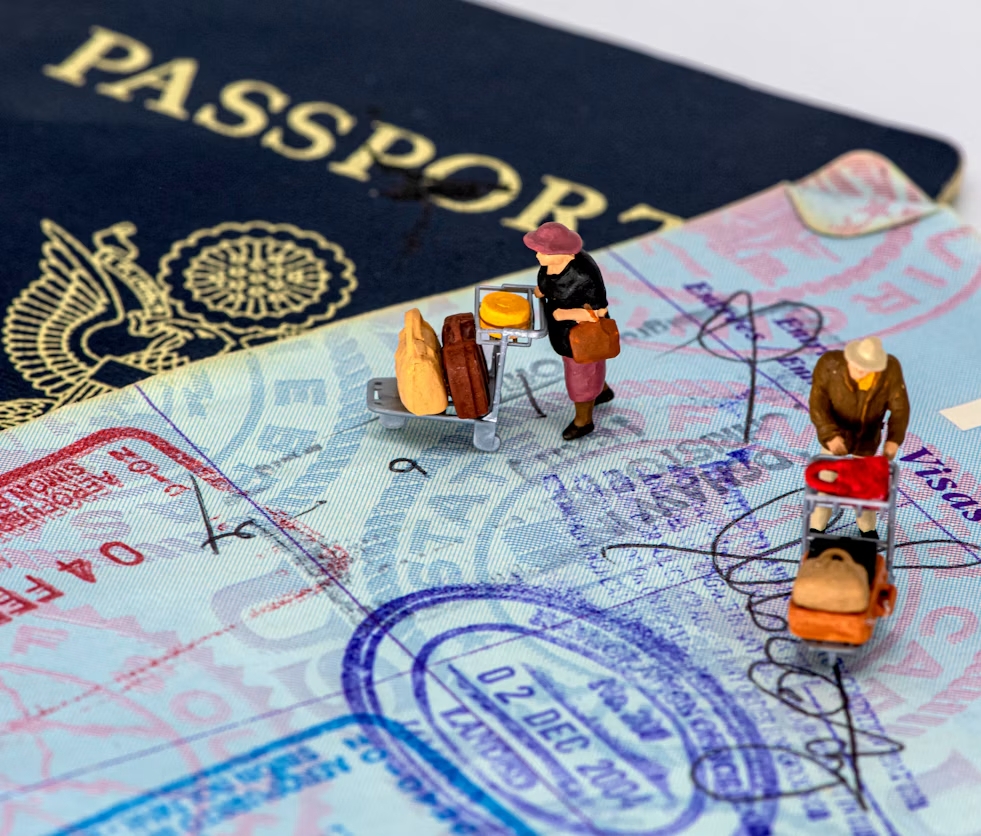
The paperwork in this situation exists to test exactly the kind of evidence a real relationship produces without trying: shared finances, family members who’ve actually met each other, answers that match because they’re remembered rather than rehearsed. If you’re questioning whether your relationship would hold up to that test, that question is worth sitting with honestly before you sign anything else.