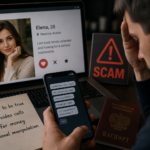
By the time a wedding date gets mentioned, most people have stopped asking hard questions. That’s exactly the moment a staged wedding scam is built to exploit, whether it’s a romance scammer using an upcoming “wedding” as the excuse for one last enormous transfer, or a completely separate operator posing as a planner, photographer, or venue owner who vanishes the week before the ceremony. Both versions share the same mechanic: a couple already emotionally and financially invested, a deadline that makes questioning feel disloyal or impossible, and a payment big enough to make the whole scheme worthwhile.
A staged wedding scam covers a cluster of related frauds, all built around the excitement and urgency of planning a wedding. Some target real couples paying for real vendors who never intend to deliver. Others involve a fabricated wedding within a longer romance scam, where the promise of marriage becomes the final justification for a large payment before the scammer disappears. A third, more organized variant involves entirely staged ceremonies, participants paid to pose as a couple, usually built around securing immigration status rather than emotional manipulation of an outside victim. Different mechanics, same core idea: a wedding creates urgency and trust that makes people skip the verification steps they’d normally take.
For scammers already running a long-term romance scam, marriage is often the natural final chapter, not a separate scheme. Months of built-up trust, an established emotional relationship, and a shared vision of the future make a request tied to “our wedding” land very differently than one tied to a stranger’s emergency. The ask can take several forms: money for a fiancé visa, funds to book a venue the scammer claims to have found overseas, a payment routed through a “wedding planner” who is either invented entirely or working with the scammer. Sometimes the scammer produces AI-generated photos of a venue, a dress, or even the couple together to make the plan feel real. The urgency is deliberate. A wedding date creates a deadline, and deadlines are exactly what stop people from slowing down and verifying details independently.
Wedding planner fraud doesn’t require a romance scam at all, and it’s remarkably common on its own. Most states have no licensing requirement to call yourself a wedding planner, which means anyone can print business cards and start collecting deposits with no credentials to check. The average wedding planner fee ran around $2,481 in 2018, and that’s before any of the actual vendor costs a planner is supposed to coordinate.
The pattern repeats with uncomfortable consistency. A Chicago couple paid a planner more than $30,000 for a catered venue in 2018, only to receive a letter nine days before their wedding announcing the planner’s bankruptcy, after she had tried to extract another $18,000 from them just days earlier. A planner in Monroe County, Florida was arrested in 2016 after defrauding two couples out of money meant for a resort wedding. An Orlando couple lost $17,000 to a planner they met at a wedding expo, who disappeared three days before their ceremony. More recently, a bride in Alabama lost $3,000 in 2025 to a planner who falsely claimed to own a venue, and by the time the truth came out, there wasn’t enough budget left to hire anyone else. The Better Business Bureau logged roughly 900 complaints tied to wedding vendors in a single recent year, and wedding planner scams remain one of the categories generating the most reports.
A common version of the scheme has the planner ask couples to write checks with the payee line left blank, promising to fill it in once a vendor is confirmed, a setup that gives the planner total control over where the money actually goes. Legitimate planners never ask for this.
Photographers top the Better Business Bureau’s list of most-reported wedding scams, and the mechanics are almost always the same: a polished portfolio, fast and friendly email responses, and a deposit collected well before the wedding date. Some of these portfolios are entirely real photos, just not the photographer’s own work. In one widely reported case, a photographer built years of business around a portfolio made up of photos taken by someone else, using friends as stand-in models, with no professional experience and, ultimately, no intention of showing up on the actual wedding day. Once one bride went public, over a dozen others came forward describing the identical experience. In North Texas, a photographer accumulated 18 formal complaints before facing indictment, a pattern that had been building for years before enough brides compared notes to force real consequences.
Some fake photographers take the scam one step further: they show up, shoot the wedding, then refuse to release the final photos unless the couple pays significantly more than what was originally agreed. By that point, the couple has no leverage and no way to get the day back if they refuse.
Florists, caterers, and other wedding vendors follow similar patterns, though photographers and planners dominate the complaint data because the financial and emotional stakes are highest when they fail.
Venue fraud tends to produce the largest single losses, because deposits are typically the biggest checks a couple writes during planning. In 2018, a venue in Kentucky canceled weddings for seven separate couples after collecting their money, all around the same time. More recently, a Texas man was accused of continuing to book weddings at a venue for nearly a year after being evicted from it, leaving a trail of victims whose combined losses topped $186,000. Another venue operator pleaded guilty to roughly $1 million in fraud after selling all-inclusive wedding packages priced between $40,000 and $50,000, promising to pay vendors directly, and then failing to do so while the venue quietly defaulted on its own mortgage and headed toward foreclosure.
The warning signs tend to be visible in hindsight: a venue whose online presence is thin or recently created, reluctance to provide a proper contract, and pressure to pay the full amount immediately rather than in scheduled installments tied to milestones.
A less dramatic but far more common version of wedding fraud involves the dress itself. An estimated 600,000 counterfeit wedding dresses ship into the US every year, most sold through websites built specifically to mimic real designers. These sites typically use stolen photos lifted directly from legitimate designer collections, so the dress pictured online often bears no resemblance to whatever actually arrives. Authentic designer gowns average around $2,260, so a listing offering the same look for a fraction of that price is one of the most reliable signals something is off. A genuine gown also carries a hangtag and an interior garment label; a counterfeit rarely bothers replicating both convincingly.
A distinct and more organized version of this scheme involves entirely fabricated wedding ceremonies designed to secure residency or citizenship rather than extract money from an outside victim. These operations typically pair a foreign national with a local citizen willing to pose as a spouse, sometimes coordinated by an agency or a small criminal syndicate that charges a significant fee to orchestrate the entire arrangement, from the ceremony itself through the interview process afterward.
Participants are often coached in advance on how to answer personal questions convincingly, since immigration interviews are specifically designed to expose couples with no real shared history. Vague or mismatched answers about basic details, how they met, daily routines, family members, are the most common way these arrangements unravel. Scammers running these schemes discourage any independent verification of identity or backstory, and they lean heavily on urgency to keep participants and any outside parties from asking too many questions. Once residency or citizenship is secured, the paired individuals typically separate or file for divorce shortly afterward. Increasingly, organizers also use AI-generated photos or messages to build a more convincing paper trail of a supposedly genuine relationship before the interview stage.
A few warning signs repeat across all three variants of this scam. Payment requested through Venmo, Zelle, or another peer-to-peer app offers none of the buyer protection a credit card or a proper contract provides, and any vendor steering you specifically toward those methods is worth questioning. A refusal to provide a written contract, or a contract with vague deliverables, should stop the conversation before any deposit changes hands. Pressure to pay the full amount immediately, rather than in installments tied to specific milestones, is a consistent pattern across fraudulent planners and venues alike. A website that looks professional but has no verifiable business history, no real client reviews outside the vendor’s own site, and no working phone number is a website built to look legitimate rather than to be legitimate. And within a romance scam specifically, any request tied to “the wedding” that arrives alongside urgency, secrecy, or resistance to a live video call deserves the same scrutiny as every earlier request in the relationship.
Ask for references and actually call them rather than emailing, since a scammer can fabricate a written testimonial far more easily than a live phone conversation. Check whether a planner or vendor belongs to a recognized professional association, since membership requirements provide at least some baseline vetting most fraudulent operators skip entirely. Pay vendors directly whenever the arrangement allows it, rather than funneling every payment through a single planner who controls where the money actually lands. Never sign a check with the payee line left blank, no matter how reasonable the explanation sounds. Ask to see raw, unedited photos or behind-the-scenes footage from a photographer’s actual past weddings, and request two or three past clients you can contact yourself rather than reviews curated on the vendor’s own website. For a dress, buy directly from an authorized retailer and treat a price dramatically below retail as a warning rather than a bargain.
Contact your bank or card issuer immediately to ask about a dispute or chargeback, since payment method matters enormously here: a credit card offers real recourse, while cash, wire transfers, and peer-to-peer apps generally don’t. File a report with the Better Business Bureau and, for larger losses, local police, since a documented pattern helps other couples avoid the same vendor. Preserve every message, invoice, and payment record before any account or website disappears. If the fraud was tied to a romance scam rather than a standalone vendor, report the profile to whatever platform it originated on and consider filing a report with the FTC or the FBI’s Internet Crime Complaint Center as well.
If a wedding is entering the conversation with someone you met online, and money is starting to move alongside it, AllAboutDatingScams can review the relationship, the claimed vendor or planning details, and any documents or photos involved to flag whether what you’re seeing matches known patterns from staged wedding scams. A second, independent look before a large payment goes out is far easier than trying to recover it afterward.
A wedding is designed to feel like the reward at the end of a long process, which is precisely why it works so well as the setting for one final, large extraction. Whether the person on the other end is a fake planner who’s never booked a real venue, a photographer whose portfolio belongs to someone else, or a romantic partner who’s spent months building toward exactly this moment, the pattern holds: urgency replaces verification, and the closer the date gets, the harder it feels to ask the questions that would normally be automatic. Those questions are worth asking anyway, especially the ones that make everyone involved a little uncomfortable.
Ask for past client references and call them directly, verify membership in a recognized wedding industry association, and insist on a detailed contract before any money changes hands. A planner who resists any of these steps is showing you what you need to know.
No. These apps offer no buyer protection if something goes wrong, unlike a credit card payment. A legitimate vendor generally accepts payment methods that leave you some recourse.
In a long-running romance scam, a proposed wedding often becomes the justification for one final, unusually large request for money, whether framed as a visa fee, a venue deposit, or planning costs, right before the scammer disappears.
Roughly 600,000 counterfeit gowns ship into the US annually. Buy directly from an authorized retailer, and treat a price far below the typical designer average as a clear warning sign.
It’s an arrangement where a foreign national and a local citizen are paired, often through an agency charging a significant fee, to pose as a married couple in order to secure residency or citizenship, typically separating shortly after that status is granted.
AllAboutDatingScams focuses on reviewing relationships and claims tied to online dating and romance scams specifically, including situations where a proposed wedding is being used to justify a large payment request within that relationship.